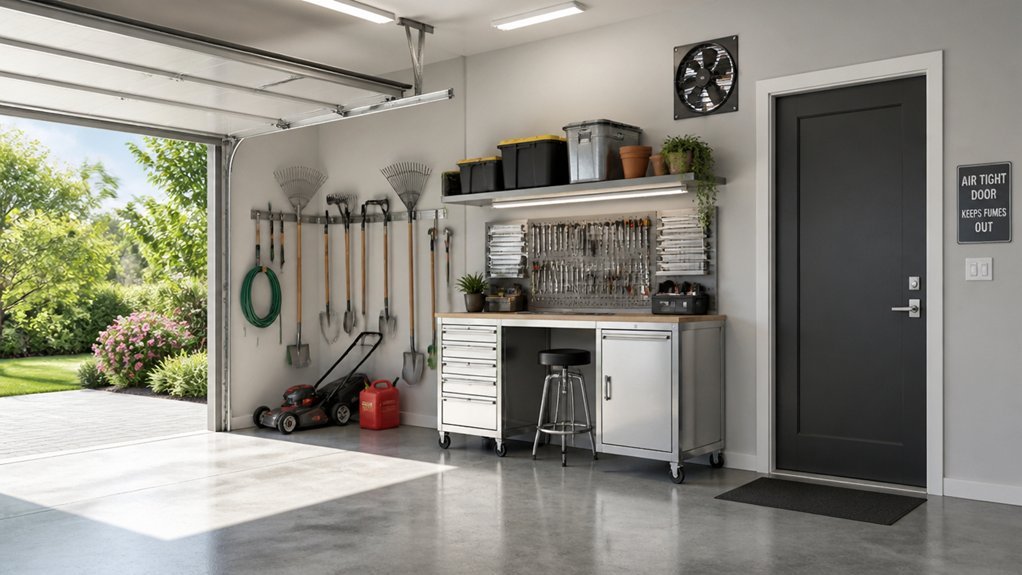
You can keep garage fumes out of your house by sealing the garage-to-house door, adding fresh weatherstripping, and fixing gaps around the frame, threshold, and utility penetrations. Keep the door shut, upgrade it to a solid-core or fire-rated model, and use a self-closing hinge if needed. Improve garage ventilation with exhaust fans and clear vents, and store fuel, chemicals, and oily rags in sealed containers. A few smart checks can make a big difference, and there’s more to know.
Seal the Garage-to-House Door
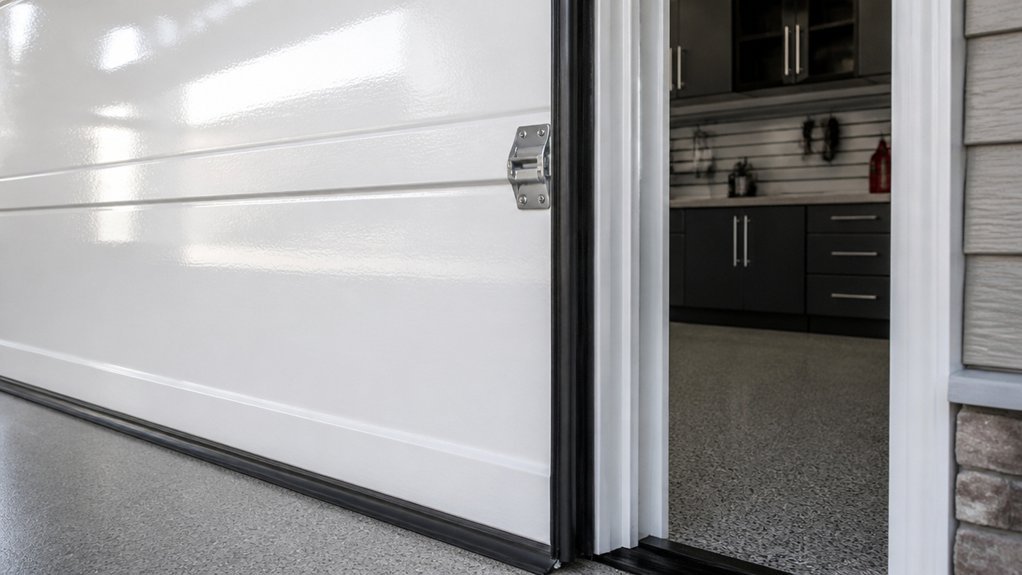
Start by sealing the door between your garage and house as tightly as possible. You should inspect the frame, hinges, latch, and threshold for gaps that let fumes drift inside. Tighten loose screws, replace damaged hardware, and make sure the door closes fully every time.
If it sticks or warps, adjust it so it sits flush in the frame. Add a solid-core door if yours feels flimsy, since it resists air movement better than hollow designs. Keep the door shut whenever you’re in the garage, and don’t prop it open for convenience.
You’ll block exhaust, solvent smells, and other contaminants more effectively when the barrier stays intact. A secure door gives you a simple, reliable first line of defense against garage fumes. Ensuring you have a high-quality sensor can detect dangerous CO levels should fumes accidentally enter your home, adding an extra layer of safety.
Weatherstrip Garage Doors and Openings
You can help keep garage fumes out by sealing the door perimeters with weatherstripping. Add weatherstripping anywhere you see gaps, and make sure it fits snugly. Then inspect the threshold seals to catch any leaks at the bottom. Regularly checking the air quality to identify potential fumes can help you determine if additional sealing is needed.
Seal Door Perimeters
Even small gaps around garage doors and side entries can let exhaust, fuel odors, and other fumes drift into your home, so sealing those perimeters is one of the most effective fixes. Inspect the edges where the door meets the frame, especially at the top, sides, and bottom.
If you see daylight, feel air movement, or notice worn trim, you’ve found a weak point. Use durable perimeter seals designed for garage doors and exterior entries, and make sure they sit flush when the door closes. Check the threshold too, since a crooked or damaged edge can leave a direct path for fumes.
Additionally, utilizing high-quality CO2 sensor technology can help monitor any lingering indoor pollutants that might enter when seals aren’t perfect. After installation, test the closure from inside the garage. Tight, even contact around every perimeter helps block odors before they spread indoors, keeping your living space cleaner and safer.
Close Gaps With Weatherstripping
Weatherstripping adds another layer of defense by sealing the small cracks that perimeter seals can miss. You can upgrade the garage door, side door, and window frames with durable strips that compress tightly when closed.
Choose material that fits your climate and use, then measure carefully so you don’t leave pinch points or loose edges.
- Clean the surface first so adhesive bonds well.
- Cut each strip to size with a sharp blade.
- Press it firmly along the gap for an even seal.
- Test the door and replace worn strips promptly.
- Ensure proper humidity control to prevent moisture buildup and fumes infiltration.
You’ll block drafts, reduce odor leaks, and help your garage stay cleaner. Check the fit after installation, then make small adjustments if light still shows through.
Inspect Threshold Seals
Check the threshold seals at the base of the garage door and around other openings, since these low spots often let fumes slip inside. Look for cracks, flattening, or gaps where rubber no longer presses firmly against the floor or frame. If you can see daylight, air can move through too. Replace worn seals with ones sized for your door and install them snugly so they create a tight barrier.
Also inspect side doors, utility entries, and any pipe or cable penetrations nearby. Clean the surfaces before you apply new material, because dirt keeps seals from sticking well. After installation, test the fit by closing the door and checking for drafts. Tight seals help block exhaust, reduce odors, and keep your garage safer. Properly sealing ventilation pathways is essential to prevent fumes from seeping into your home.
Improve Garage Ventilation Safely
You can cut garage fumes fast by installing exhaust fans that push stale air outside.
Open opposing vents so fresh air can move through the space instead of trapping odors inside.
Guide airflow along safe paths so fumes don’t drift into your home.
Using a digital hygrometer can help you monitor humidity levels to prevent moisture buildup that could worsen odors or lead to mold issues.
Install Exhaust Fans
To improve garage ventilation safely, install an exhaust fan that pulls stale air and fumes outside rather than letting them drift into your home. Choose a fan sized for your garage, then mount it high where hot, contaminated air gathers. Wire it to a switch, timer, or motion sensor so you can run it when you need it. Keep the unit clean and check the blades, grille, and motor regularly for dust buildup. Ensure the fan has an adequate detection range to effectively remove low- and high-level fumes. Pick a fan with enough airflow for your space. Place it near the ceiling for better capture. Use a control that encourages regular operation. Test it after installation to confirm strong airflow.
Open Opposing Vents
Open opposite vents in your garage to create a cross-breeze that pushes fumes out instead of letting them pool inside. Crack both sides enough to let fresh air move through, but not so wide that rain, pests, or debris can slip in.
If your garage has high and low vents, open them together to help warm, polluted air escape faster. Use this setup whenever you run a car, mower, or fuel-powered tool, and keep it going until the smell fades.
Check that vents aren’t blocked by boxes, insulation, or dust, because even a partial obstruction can weaken airflow. When you combine open vents with a clear garage floor, you’ll reduce buildup and make it harder for fumes to drift into your home.
Use Safe Airflow Paths
Guide air so it moves from the garage to the outside, not toward the doorway or shared walls. You can do this by placing fans near the far end of the garage and aiming them toward open vents or a partially open door on the exterior side.
Keep interior doors closed so fumes don’t drift into your home.
- Set a box fan to push air outward.
- Keep the garage door cracked, not wide open, when you need control.
- Block gaps under the house door with a tight sweep.
- Check airflow after starting your car or using chemicals.
You should also avoid creating crosswinds that send exhaust back inside. If fumes linger, add more exhaust at the farthest point and test again.
Store Fuel and Chemicals Safely
Store gasoline, paint thinner, solvents, and other chemicals in tightly sealed containers designed for that product, and keep them in a cool, dry spot away from heat sources, pilot lights, and direct sunlight. You should never leave lids loose or pour leftovers into open buckets, because fumes escape fast.
Label each container clearly so you don’t grab the wrong one, and store each product on a stable shelf or cabinet, not on the floor where spills spread. Keep oily rags in a metal container with a tight lid, since they can release vapors and even ignite.
Buy only what you’ll use soon, and dispose of old fuel and chemicals at a proper collection site. This cuts odor, limits vapor buildup, and helps protect your home.
Upgrade the Door to the House
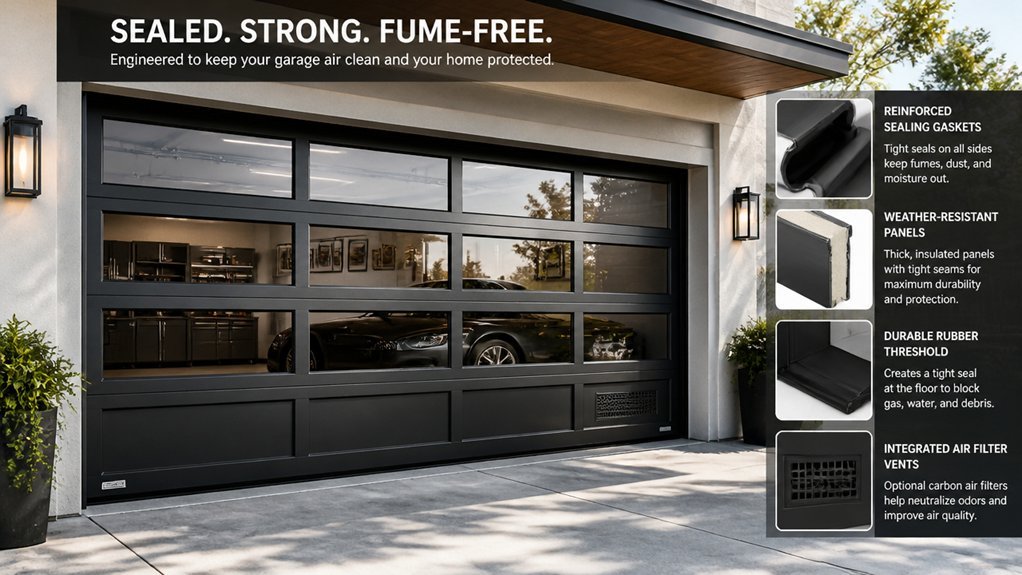
A good storage setup helps, but fumes can still slip into the house through a weak door. You can block more garage air by upgrading the door that connects the garage to your home.
Start with a solid-core door, then check the fit around the frame. Add weatherstripping to seal gaps, and install a tight door sweep at the bottom. Use a self-closing hinge or closer so the door doesn’t stay open after you pass through.
- Choose a solid-core fire-rated door.
- Seal the jamb with fresh weatherstripping.
- Add a durable sweep to the threshold.
- Test the latch so the door closes snugly.
These changes don’t take much space, but they can make a real difference in keeping fumes outside where they belong.
Use Exhaust Fans and Air Purifiers
Even with the door sealed, garage air can still build up fast, so you’ll want to move it out and clean it up. Install a high-capacity exhaust fan to pull fumes outdoors whenever you run the car, store chemicals, or use tools that release odors.
Choose a fan rated for the garage size, and place it where it can clear stale air quickly. You can also add a portable air purifier with a true HEPA filter and activated carbon to trap particles and reduce lingering smells.
Run the purifier after projects, and keep it near the main work area for better results. Together, these tools help you lower fumes before they drift deeper into your home and make the garage air safer to breathe.
Find Air Leaks and Negative Pressure
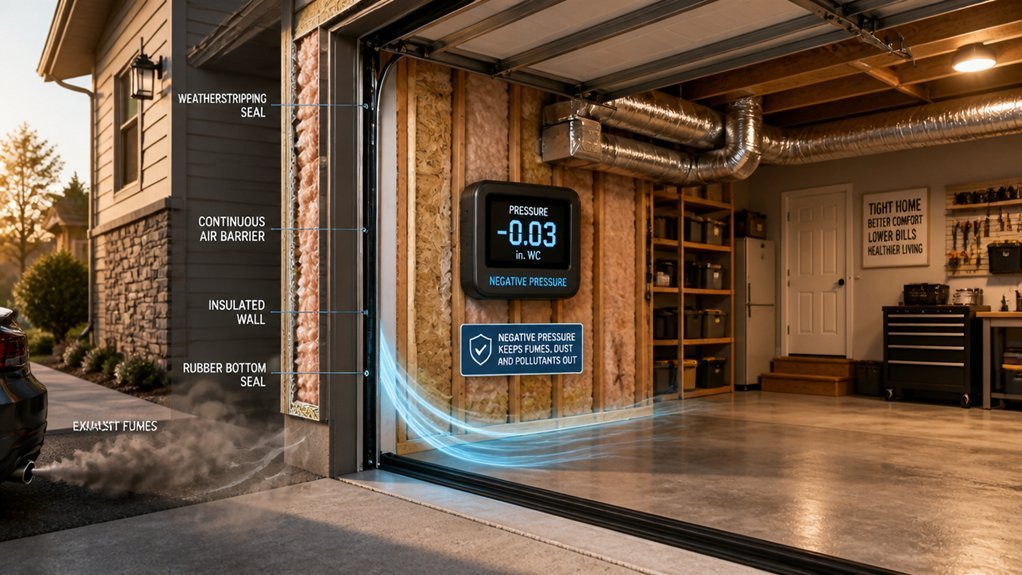
Air leaks around the garage door, walls, and utility penetrations can let fumes slip into your home, especially if the house is under negative pressure. You can stop that by checking where outside air sneaks in and where indoor air gets pulled out.
Use smoke or a tissue near gaps to spot drafts, then seal them with caulk, weatherstripping, or foam.
- Inspect the garage-to-house door frame for cracks.
- Seal pipe, cable, and vent openings with the right material.
- Test whether kitchen or bath fans create strong suction.
- Balance airflow by opening a window when needed.
If your garage has a door to the house, keep it tightly closed and weather-sealed. When you reduce leaks and pressure differences, you make it much harder for fumes to travel indoors.
Frequently Asked Questions
How Often Should Garage Seals Be Inspected for Wear?
You should inspect garage seals at least twice a year, and after storms or temperature swings. Check for cracks, gaps, and stiffness, then replace worn seals quickly so you can keep fumes out effectively.
Can Plant-Based Air Filters Reduce Garage Odor Exposure?
Yes, you can use plant-based air filters to help reduce garage odor exposure, but they won’t stop all fumes. You’ll still need ventilation, sealing gaps, and source control for real protection.
What Signs Indicate Dangerous Carbon Monoxide Buildup?
You may notice headache, dizziness, nausea, confusion, weakness, chest pain, or drowsiness. You can’t see or smell carbon monoxide, so use alarms and leave immediately if symptoms appear together.
Do Attached Garages Need Separate Smoke Detectors?
Yes, you should install separate smoke detectors in attached garages, but not inside the garage itself; use them in the home and near the door. Check local codes, since requirements can vary by area.
Are Garage Fumes Worse in Winter or Summer?
Garage fumes can feel worse in winter because you keep windows closed and traps odors inside. In summer, heat can increase evaporation, so you may notice stronger smells if ventilation’s poor.
In Summary
By sealing gaps, improving ventilation, and storing fuels safely, you can keep garage fumes from drifting into your home. Don’t overlook the door between the garage and house, and make sure your garage doors and openings are weatherstripped היט. If you use exhaust fans and air purifiers, you’ll improve air quality even more. Stay alert for leaks and pressure issues, and you’ll create a safer, fresher living space for your family.